Air-powered tensioning. Friction-welded plastic strap.
PP & PET strapping • Friction-weld joint • No metal seal required
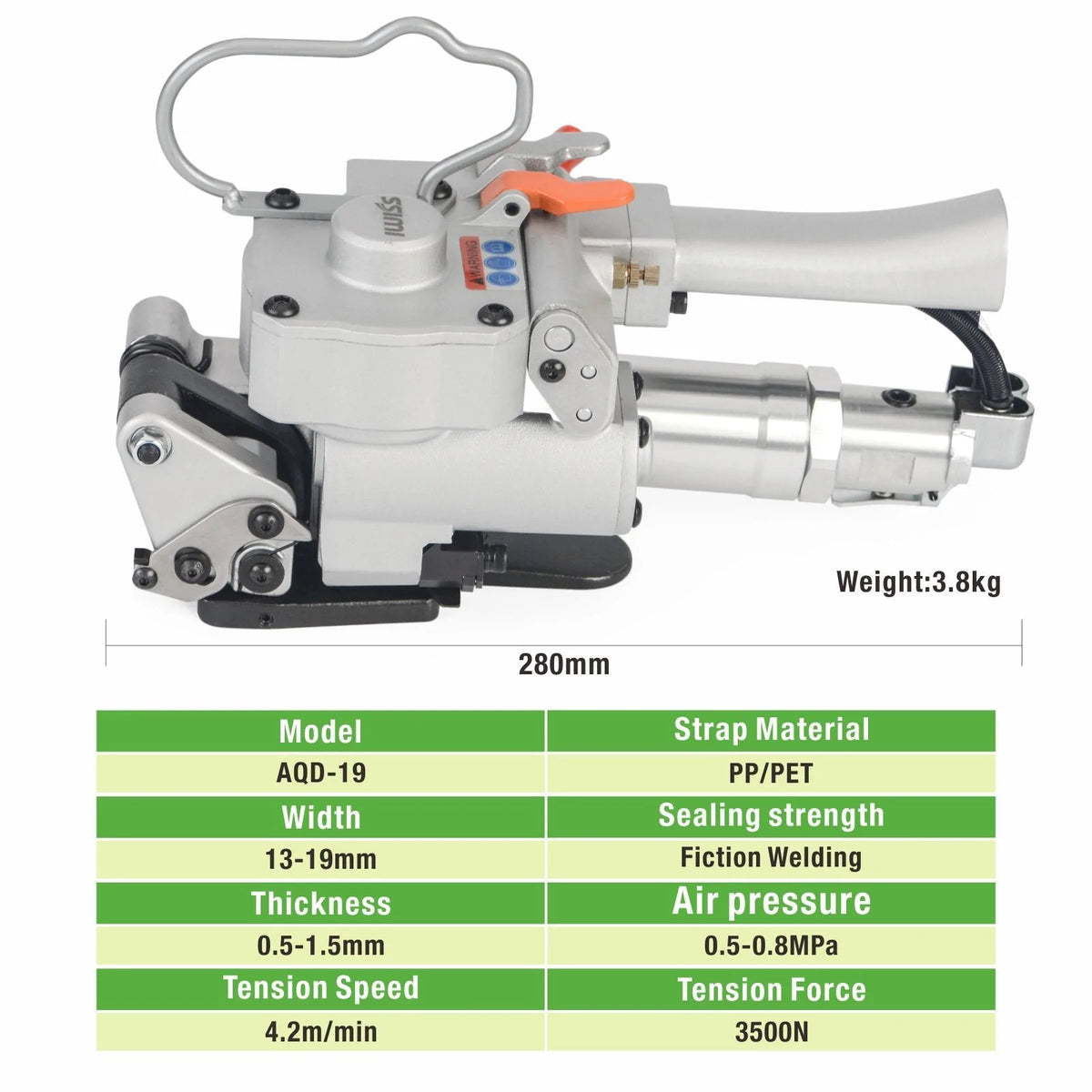
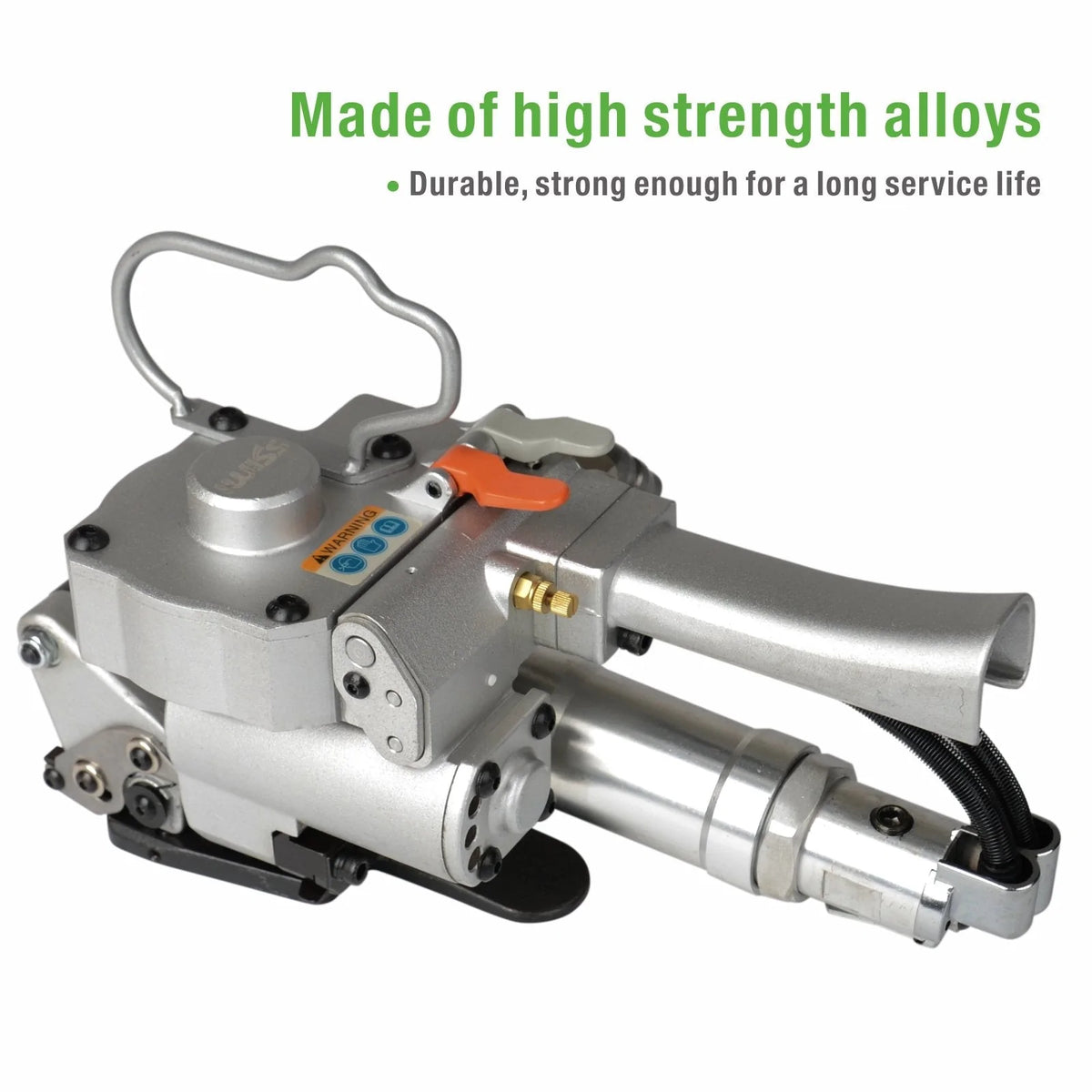
The AQD-19 pneumatic strapping tool tensions compatible plastic banding and forms a welded joint for packaging and palletizing work. It suits packing stations with an appropriate compressed-air supply, combining tensioning, welding and excess-strap cutting in one tool.
Before ordering: match the actual strap width and thickness, and confirm that your air system can maintain the required pressure and flow during operation.
How friction welding joins the strap
Overlap → tension → friction weld → hold and cool → inspect. The tool pulls the strap around the load. During welding, the overlapping plastic strap surfaces move rapidly against each other under pressure. Friction generates heat at the interface, locally melting the plastic. When movement stops, the joint remains pressed together while it cools and solidifies.
This is friction welding, a heat-fusion process. It does not use an externally heated blade to make the joint. The compressed air supplies mechanical power; the heat is produced by friction. Follow the model instructions for cutting, cooling and tool release.
Why choose a friction-weld joint?
-
No separate metal seal: eliminates the metal clip used in a conventional sealed plastic-strap joint.
-
No heated-blade warm-up: heat is generated at the strap interface during the weld.
-
Integrated handling: tension, weld and trim with one tool, reducing tool changes.
-
Practical for repeat packing: establish suitable settings on a trial assembly, then check joint quality throughout the batch.
Joint performance depends on strap quality, alignment, surface cleanliness, weld settings and adequate cooling. Tool tension is not a rating for the finished joint or the load.
PET polyester strap vs. PP polypropylene strap
PET means polyethylene terephthalate, commonly called polyester strapping. The Chinese trade name “塑钢带” refers to this plastic packaging strap; it does not mean steel-reinforced banding. Use “PET strapping” or “polyester strapping” when specifying material in English.
PET: commonly selected for more demanding pallet and bundle applications where strength and retained tension matter. Performance varies with strap grade, dimensions and load conditions.
PP: polypropylene strapping, commonly selected for lighter cartons and general packaging. It generally stretches more and retains tension less well than polyester. Match the tension to the package to avoid crushing or damage.
PET is specified in the operating manual; the product brochure also lists PP. For PP applications, confirm your strap grade and tool configuration before ordering. Use compatible weldable strap within this listing's dimensions. Steel banding, woven/composite cord strap and nylon cable ties are different systems. Strap color alone does not identify the material or its performance.
Specifications — US and metric units
Configuration check: documentation differs on maximum tension and strap thickness. This listing retains the narrower 0.5–1.2 mm thickness range; ask us to confirm compatibility before selecting thicker strap. Changing between 13, 16 and 19 mm strap requires the appropriate side-guide and cutter-guide setup.
Metric & US units: Converted values marked ≈ are rounded for reference; the original rating and model-specific instructions govern selection. The common 1/2, 5/8 and 3/4 in. strap labels are nominal, not exact conversions of 13, 16 and 19 mm. Match actual strap width and thickness.
What compressed-air supply do I need?
Manual operating range: 72–100 psi. Recommended working point: approximately 91 psi / 6.3 bar / 0.63 MPa. Never exceed 100 psi. Confirm pressure at the tool while it is operating, not only at the compressor tank when idle. Follow the current tool label and instructions; do not exceed the rated pressure.
-
Supply: use a suitable workshop compressor or regulated plant compressed-air line.
-
Air preparation: install a filter–regulator–lubricator (FRL) as close to the tool as practical. Supply clean compressed air, drain collected moisture daily and maintain the specified pneumatic-tool lubrication.
-
Flow and duty cycle: select compressor delivered airflow at the operating pressure for your cycle frequency and the number of tools sharing the line. Tank size or horsepower alone cannot establish suitability.
-
Hose and couplers: the manual specifies a minimum hose internal diameter of 6 mm (nominal 1/4 in.); its illustrated setup uses a 3/8 in. hose. These are hose sizes, not inlet-thread specifications. Avoid restrictive fittings, excessive length and leaks; confirm the actual quick-coupler and inlet-thread standard before connection.
-
Before buying a compressor: request the model's verified air-consumption specification in L/min or SCFM, including whether it is free-air consumption and the stated duty cycle. A verified airflow figure is not specified on this page.
A small portable compressor may reach the required static pressure yet fail to maintain flow during repeated tensioning and welding. Do not compensate for inadequate flow by exceeding the rated pressure. Disconnect and isolate air before adjustments or maintenance.
Where AQD-19 fits
Consider it for carton palletizing, timber bundles, building-material packages and warehouse dispatch where compatible PP/PET strapping is specified. Use corner protection and a suitable load-containment plan for sharp edges, fragile packages or settling loads.
It is especially relevant to a fixed packing station that already has compressed air. Air-hose access is part of the setup; this is not a cordless tool. Packaging straps are not lifting slings.
Choose the setup for your packing job
| Application |
What AQD-19 helps you do |
Check before use |
| Cartons and palletized goods |
Combine tensioning, sealing and trimming at the dispatch station. |
Use suitable strap tension and corner boards to protect cartons. |
| Timber, panels and wooden cases |
Apply welded polyester banding around compatible bundles. |
Provide a stable tool contact area and protect sharp edges. |
| Paper and textile packages |
Reduce repeated manual tensioning when packing batches. |
Test for package compression and settling after strapping. |
| Industrial components and metal-product packaging |
Secure loads specified for PP/PET banding. |
Confirm load containment and edge protection; this tool does not weld steel strap. |
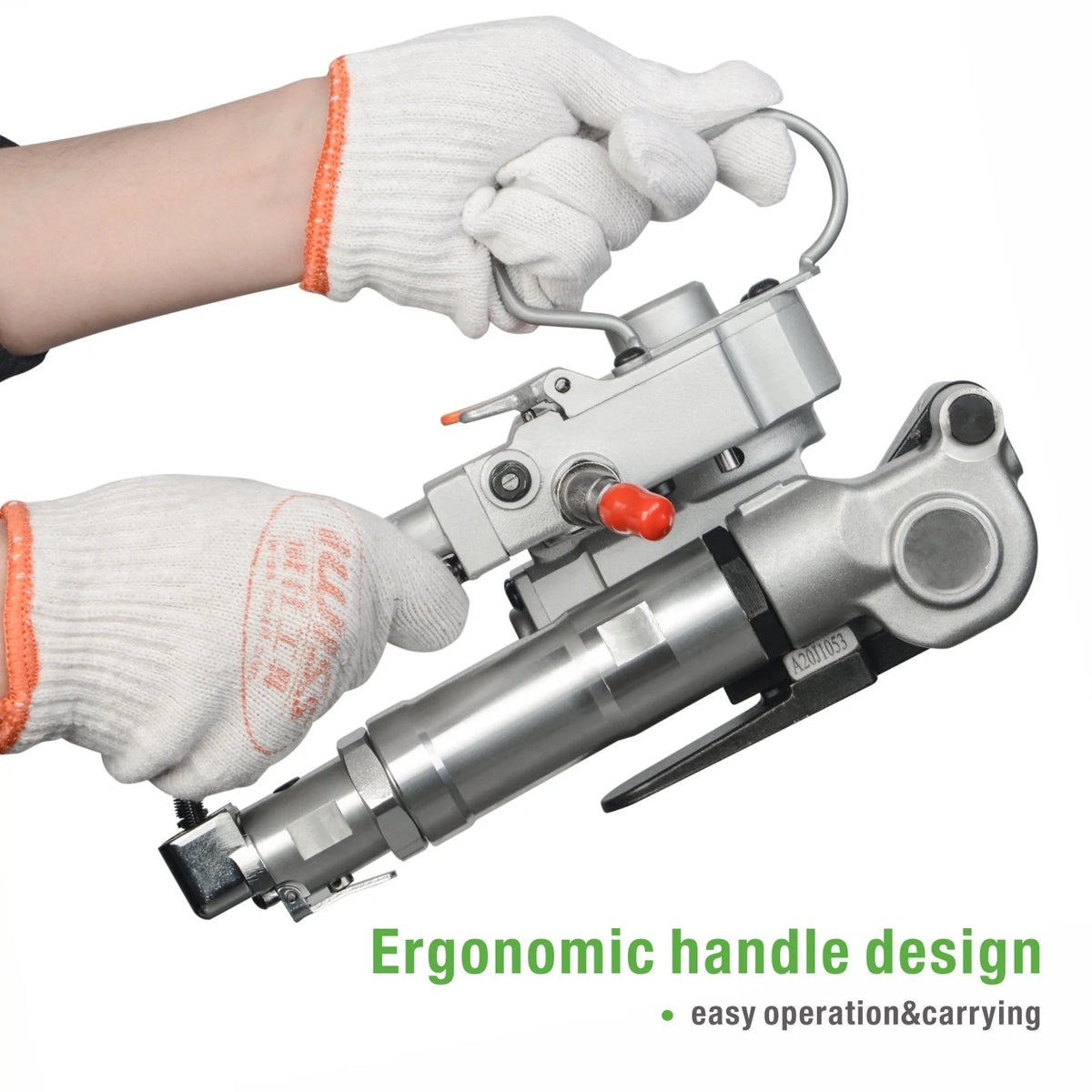
Three operations, one tool: pneumatic tensioning reduces repeated hand-pumping, friction welding removes the separate metal-seal step, and integrated cutting trims the excess strap. The operator still wraps and loads the strap, operates the controls and checks the finished joint.
Pneumatic, battery or manual strapping tool?
Choose pneumatic operation for a packing station with a suitable air line and regular batch work. A battery tool suits work away from an air hose. Manual tensioning and sealing may suit occasional packaging. Compare the complete setup, including air preparation, consumables and daily workload.
Set up and check the first joint
Confirm the strap material, actual width and thickness, and the required width setup. Keep the overlap aligned and clean. Adjust tension and welding time according to the current instructions and trial the actual strap and package. Allow the required cooling period before releasing the tool or loading the joint. Inspect and verify sample joints before production, especially when changing strap suppliers or dimensions.
The listed 2–5 second welding adjustment is not the total packing cycle or cooling time. Longer welding time is not automatically a stronger joint.
Frequently asked questions
Is it friction welding or heat sealing?
It uses friction-generated heat to fuse the overlapping plastic strap surfaces. The precise term is friction welding; it is different from heated-blade sealing.
Do I need metal clips or buckles?
Not for the compatible friction-welded plastic-strap joint. Use the specified weldable PP/PET strap and follow the joint procedure.
Can I use nominal 1/2, 5/8 or 3/4 inch strap?
These are common market labels near 13, 16 and 19 mm, but they are not exact equivalents. Verify actual width, thickness and the required tool setup before ordering.
Will my 90 psi compressor work?
Pressure alone is insufficient to decide. Check the actual operating pressure at the tool, delivered airflow at that pressure, hose restrictions and your packing frequency. Send these details to sales@iwiss.com for a configuration check.
Is tool tension a package weight rating?
No. Tool tension describes the pulling force under specified operating conditions. It is not a joint-strength rating or a safe package/load capacity.
Compare related tools
Choose by application and supply requirements. These models are alternatives, not interchangeable tooling.
Get a configuration check
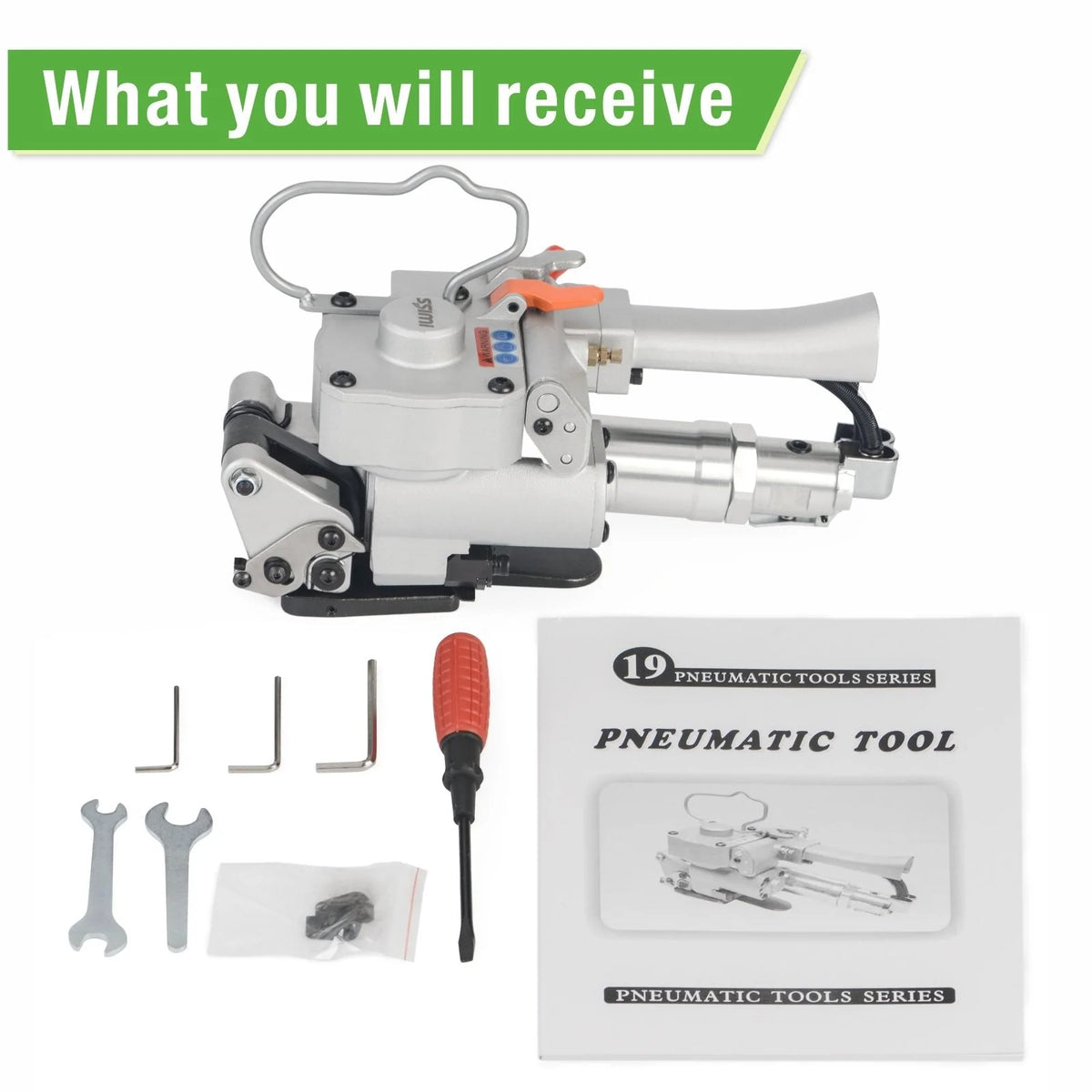
Send your strap material, width and thickness, joint/seal specification, package size, daily workload and available air pressure (bar or psi). Confirm the air inlet thread and coupler separately (for example, NPT versus BSP). Include the selected model and delivery country/postcode so we can confirm package contents, availability and shipping options.
Email sales@iwiss.com · Shipping information · Returns and warranty terms